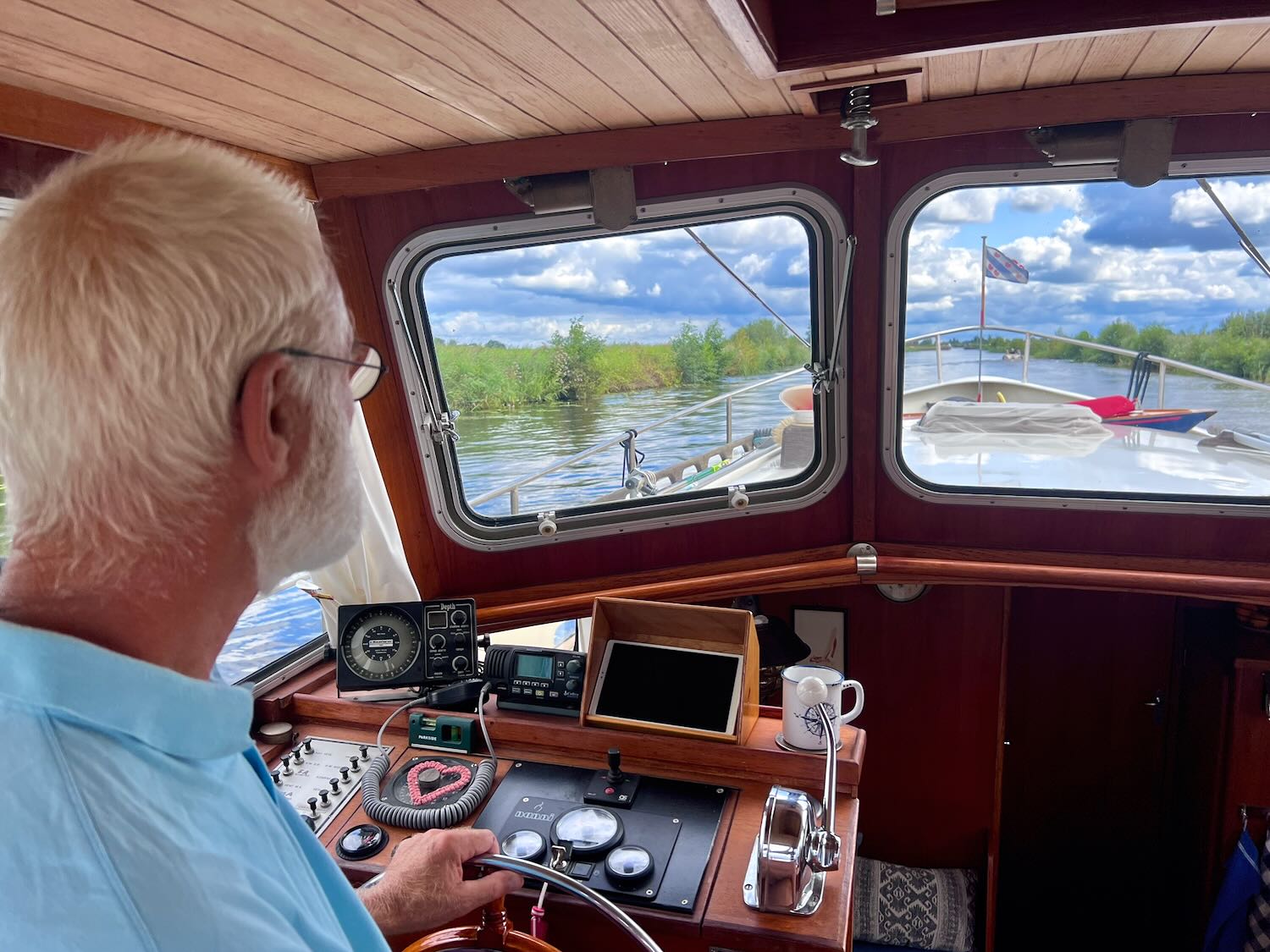
our skipper doesn’t need a map
Somewhere in the middle of the Pikmeer, a lake in the heart of Friesland in the north of the Netherlands, any sense of direction dissolves. The open water gives way to a maze of reeds and side channels. Our skipper pays no attention to navigation screens or paper charts. He looks at the horizon, eases the helm to port, and a moment later nudges the boat to starboard. Decades of experience guide our motor cutter, a compact cruising boat, through a watery labyrinth that looks entirely identical to us.
Earlier today we stepped aboard in Grou, a village in Friesland (Fryslân in the local Frisian language) with centuries of boatbuilding and sailing history. Above the tiled roofs rises the Sint-Piter Church, its choir and nave dating from the twelfth century, its heavy tower added much later. At the quay lies a skûtsje, a traditional Frisian flat-bottomed cargo sailing boat, motionless, waiting for a breeze that fails to arrive.
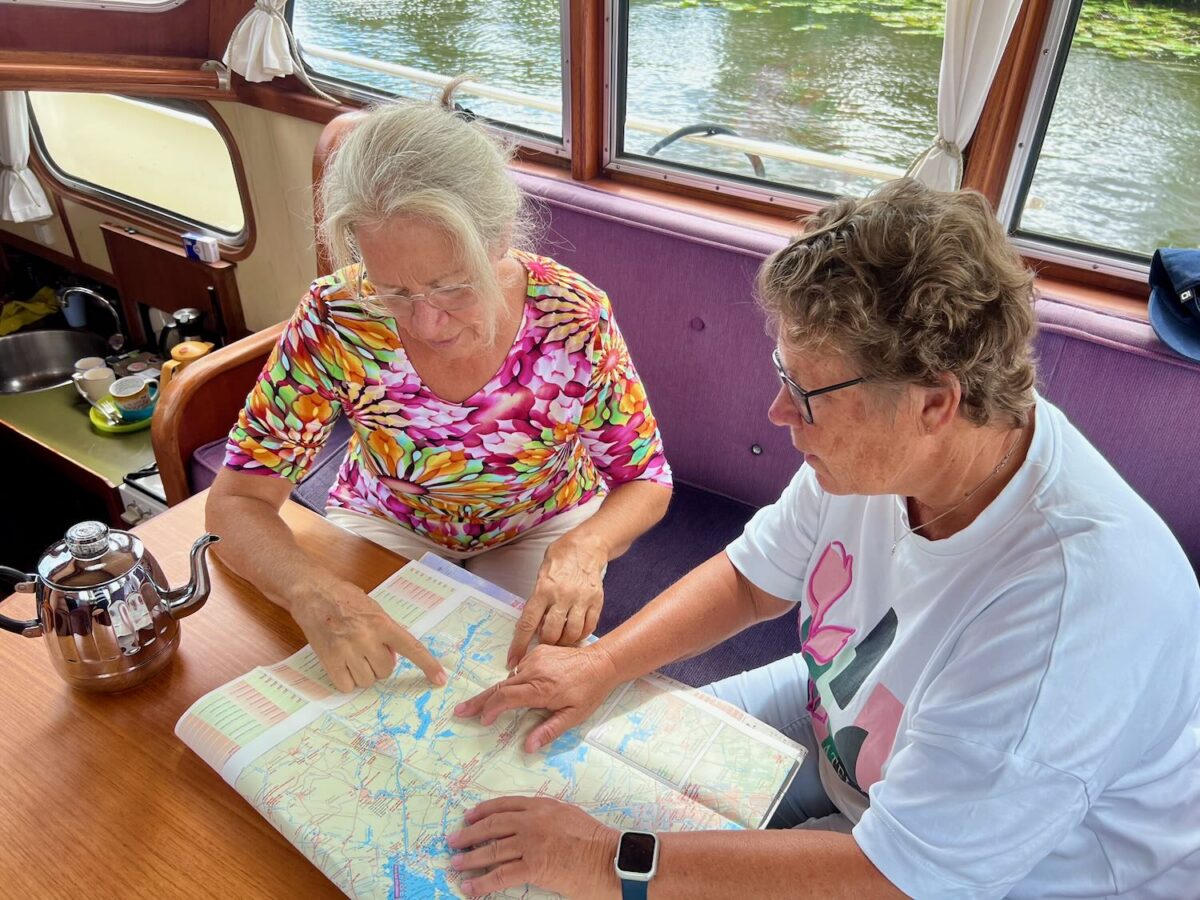
Barely outside the village, the houses give way to endless greenery. Then a deep rumble echoes from behind. At first nothing appears on the water, but soon the massive bow of a commercial inland vessel looms up. A wall of dark steel slides past, making our cutter feel tiny. Commercial freight seems improbable on such narrow waterways, yet animal feed is still transported by barge to Drachten, a town to the east.
A quarter of an hour later, a pushed barge approaches. Suddenly the waterway seems to contract. Is there room for two vessels? Our skipper calmly reduces speed and steers close to the reed bed. From their raised wheelhouse, the barge crew look down and raise a hand in greeting. We wave back. As soon as the steel hull clears our stern, the engine picks up speed again.
Reeds and narrow channels
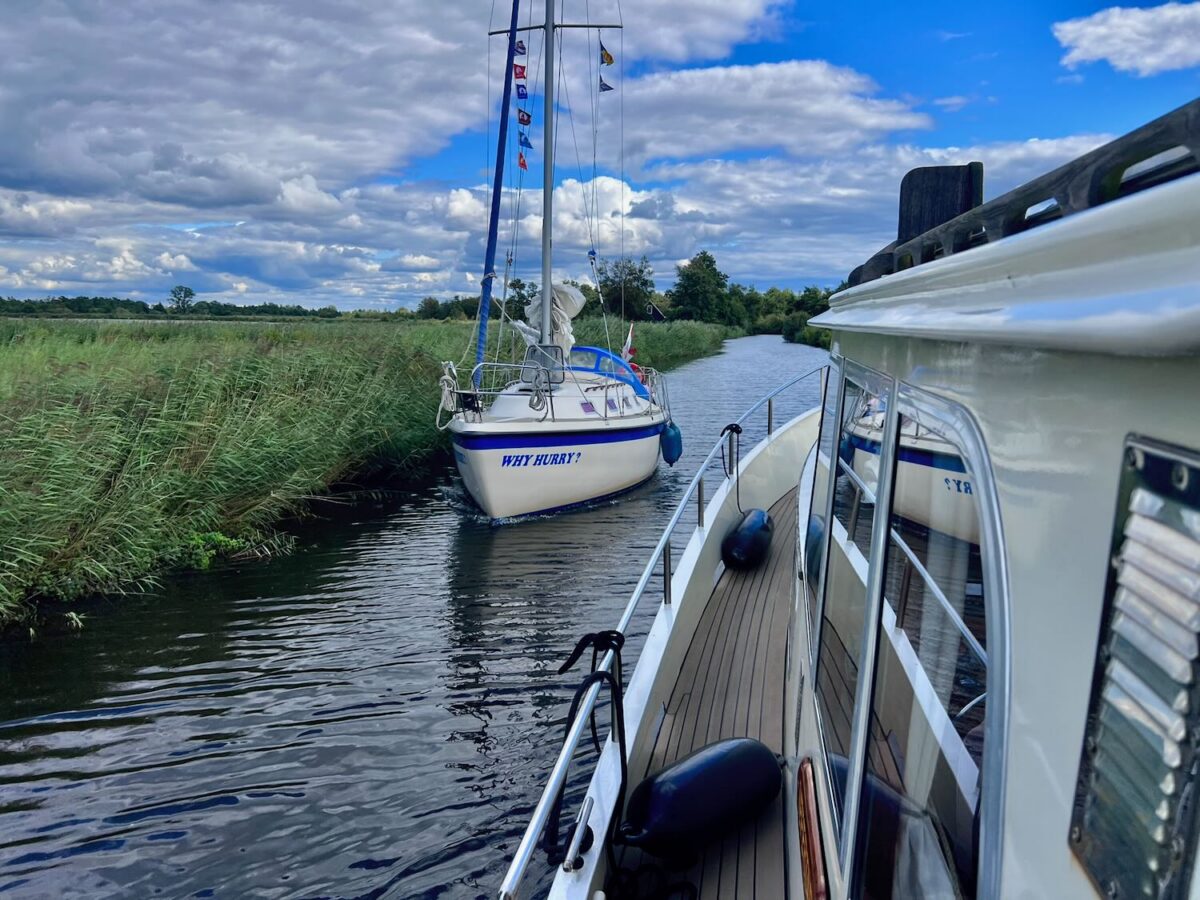
Beyond the main channel, only reeds remain. They grow so dense on both sides that the banks disappear. Leaving the open water, we turn into a ditch barely wider than our cutter. When a sailing yacht approaches from the opposite direction, passing seems impossible.
Our skipper remains unfazed eases the throttle and brushes the edge of the reeds. With no more than a hand’s breadth between the hulls, the boats slide past each other. The engine hums quietly. A startled great crested grebe takes flight, leaving barely a ripple.
At the Romsicht watchtower we slow down to take in the structure. Thirteen metres tall, it stands on the foundations of a farmhouse built in 1929 and demolished in 1967. Of the original dwelling, only the concrete footprint remains.
Then comes a list of names: Pikmeer, Wide Ee, Goëngahuistersloot, Modderige Bol, Hooidamsloot, Kruisdobbe, Fokkesloot. These are lakes and channels, and the skipper recites them like a shopping list. Even with an electronic chart, finding our way here would be a struggle.
Asked how he remembers every turn, he simply shrugs. He has navigated these waters all his life. The landscape holds no secrets for him, and that is explanation enough.
Traces of peat digging
De Alde Feanen, Frisian for “The Old Fens”, is a low-lying peat bog of shallow lakes, peat pits, ditches and meadows, shaped almost entirely by centuries of peat extraction. Where workers dug out the peat, water-filled trenches formed.
Between them lie narrow strips of land where the wet peat was spread to dry, then cut into blocks and carted off as fuel. The straight trenches and narrow drying strips are still etched into the terrain. The peat cutters themselves are long gone.
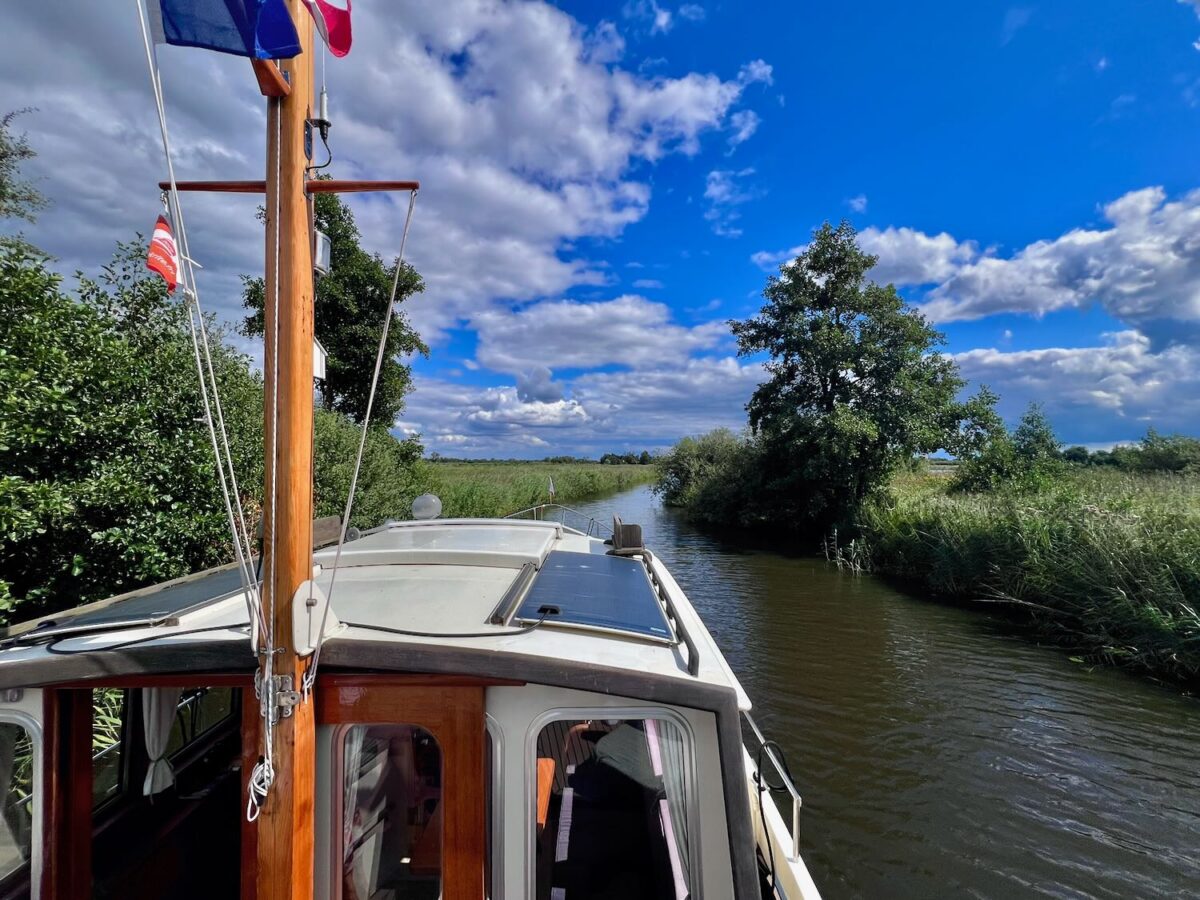
From the water, reeds dominate the view. Now and then the landscape opens into a broad pool where a bird of prey circles overhead, hovers briefly and dives into the grass. Further on, something disturbs the surface near the bank, a ripple smoothing out as quickly as it appeared. Perhaps an otter. It stays unseen, which suits a landscape built on layers of quiet history.
Nesting holes in stone
Near the Neare Saiter channel, conversation on board falters. Out of the reeds rises a semicircular stone wall, 32 metres wide, matching the wingspan of a Second World War Lancaster bomber. This is the Zwaluwhaven (“Swallow Harbour”) memorial.
Built into the masonry are 251 nesting holes, one for each of the 251 aircraft that took off from England for Bremen on the night of 4 September 1942.
Twelve aircraft never returned. One of them, Lancaster R5682, crashed nearby, on the site of the former Ald Dwinger landfill. The wreckage was not recovered until 2017.
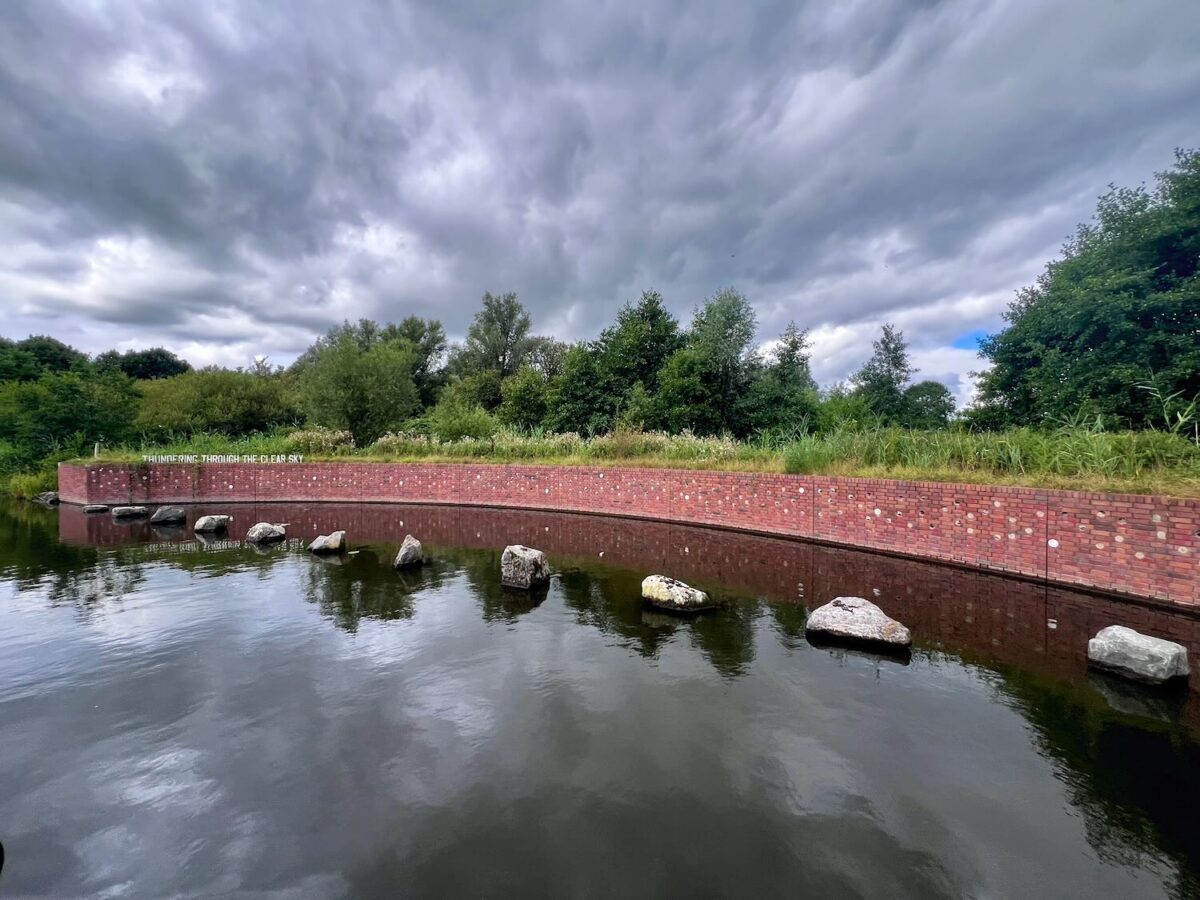
Twelve of the nesting holes are bricked shut. Inside each sits a metal capsule holding a message from relatives, cast from parts of the salvaged aircraft: memory, literally set in metal and sealed into stone. The other openings are left for sand martins, which will nest here again in spring. We glide slowly past the wall. No birds are flying today. Only the low rumble of our engine echoes against the wet stone.
Decades of experience
Late in the afternoon, the skipper steers towards a wooden jetty belonging to Marrekrite, the organisation that maintains a network of public moorings in Friesland. Dozens of these moorings lie hidden across the lakes and channels of the province.
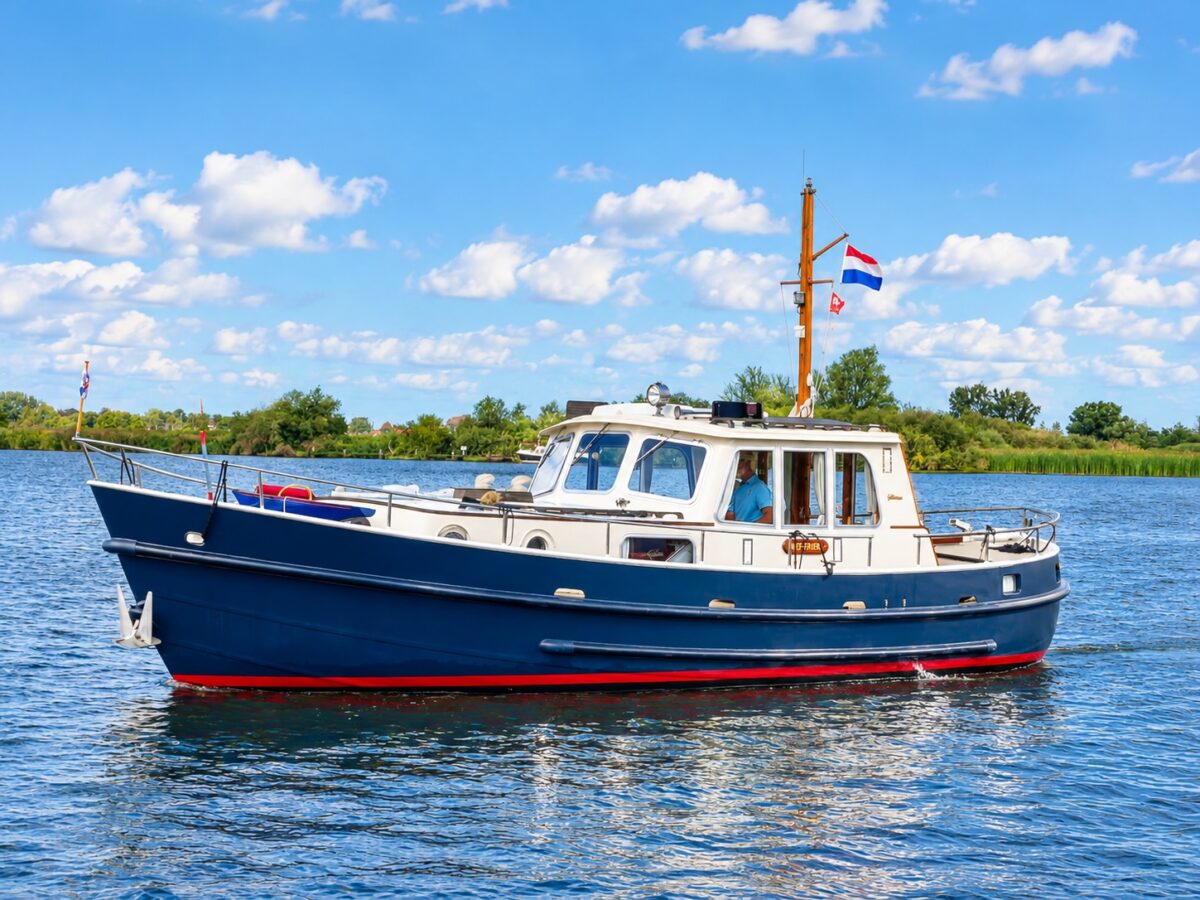
The engine stops. Water laps gently against the wooden piles, and a bird calls from the reeds. On the side deck, line in hand, we secure the boat. This stretch of water is unfamiliar to us, but years of sailing make mooring second nature.
This morning we stepped aboard at a bustling quay in one of Friesland’s famous water sports villages. Finding the way there was easy. Soon afterwards the houses faded, and with them any certainty about our position.
Our skipper knew where we were at every moment. On the way back, we no longer ask for directions. The man at the helm navigates as he has done for decades, by a map etched firmly into his memory.
Facts and figures
- Area: De Alde Feanen National Park, over 4,000 hectares of low-lying peat marshland, designated in 2006 as the twentieth national park of the Netherlands.
- Route: Grou, via the Pikmeer and Wide Ee into De Alde Feanen, ending at a Marrekrite public mooring near the Neare Saiter.
- Vessel: Gillissen motor cutter.
- Sint-Piter Church (Grou): choir and nave from the twelfth century; tower added later.
- Romsicht watchtower: 13 metres high, built on the foundations of a former farmhouse (constructed 1929, demolished 1967).
- Zwaluwhaven memorial: a 32-metre curved stone wall mirroring the wingspan of a Lancaster bomber, with 251 nesting holes for the aircraft sent to Bremen in September 1942. Twelve sealed holes contain metal capsules cast from the recovered wreckage of Lancaster R5682.

Leave a Reply