In the footsteps of the Phoenicians
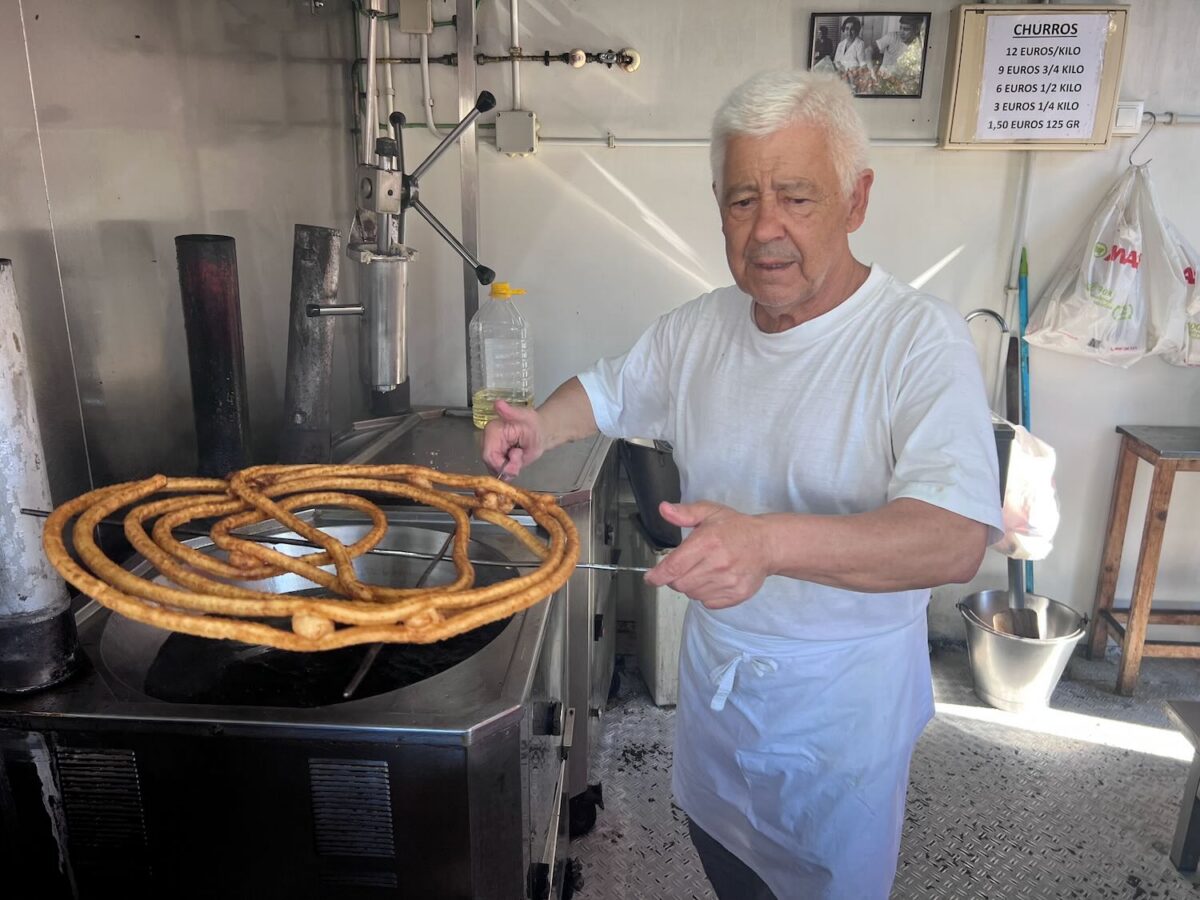
One fluid motion, one single spiral. The dough drops into the sizzling oil. Within seconds, the crust turns a rich golden-brown. At Churrería Ana, this ritual has been playing out for decades. We ask if we can take a photo. He nods enthusiastically, gesturing to show us the best angle.
He takes immense pride in his craft. With a swift movement born of years of practice, he lifts the long coil of churros from the oil and cuts it into bite-sized pieces. Would we like sugar on top? Ofcourse, we do.
By the time we step out of our taxi mid-morning, the thermometer in Cádiz has already reached thirty degrees. Memories come flooding back. Twenty years ago, we walked these very streets.
Back then, we arrived in the dead of night aboard our sailing yacht after attempting to reach Tangier against headstrong winds and currents. We have returned a few times since. Yyet we always felt as though we hadn’t truly got to know the city.
On the square outside the Mercado Municipal, we eat our churros while the smell of hot oil gradually gives way to the salty tang of fresh fish. A gentle hum of conversation floats across the café terraces. Table tops are dotted with cortados, and a waitress carries out plates of tostadas.
Fishing with the almadraba
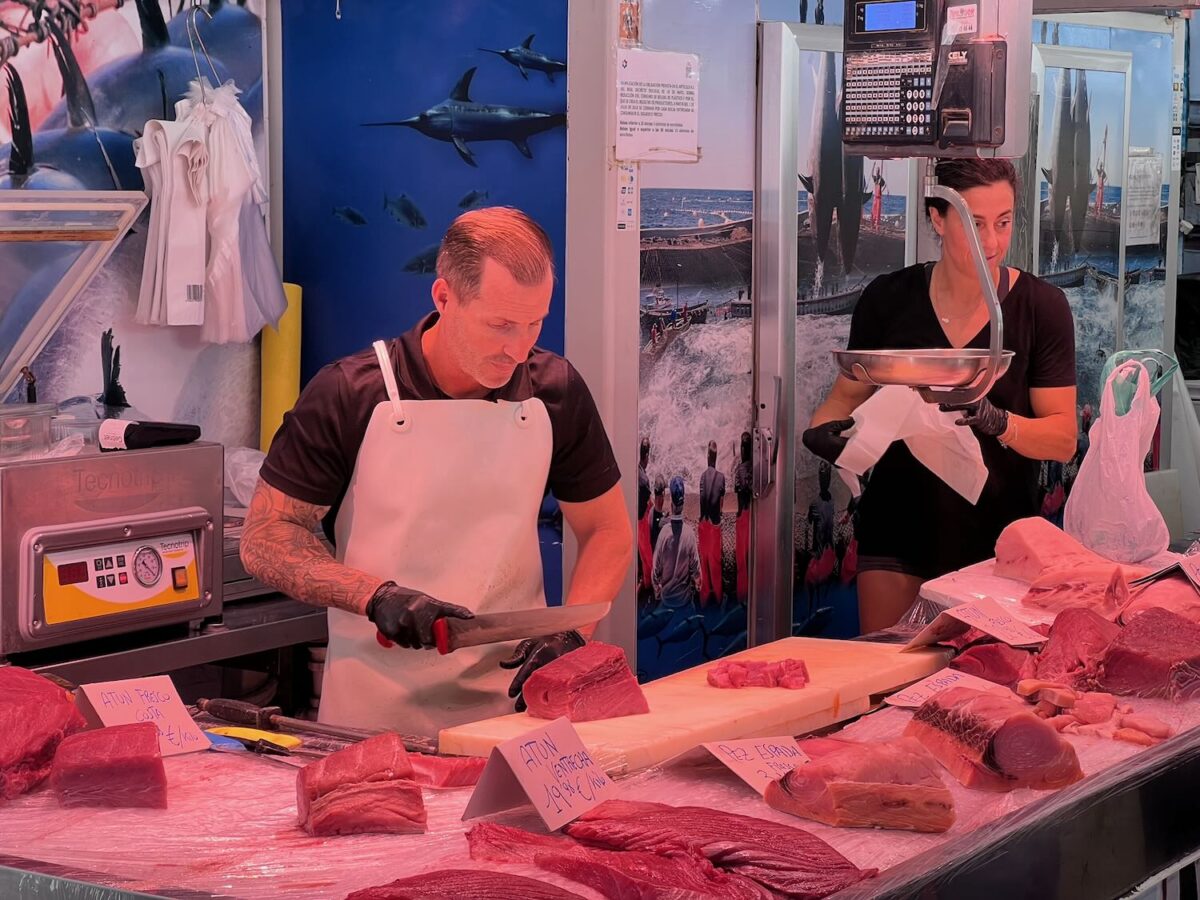
Inside the market hall, it is refreshingly cool. Deep red tunas – the renowned atún rojo – lie resting on ice across the stalls’ marble slabs. For centuries, local fishermen have caught tuna using the almadraba, an intricate system of fixed nets anchored to the seabed.
Years ago in Barbate, a coastal town just north of Cádiz. We saw fields filled with rusting anchors; only later did we realise they belonged to the tuna fishermen.
The technique of the almadraba dates back to the ancient Phoenicians, who founded the settlement of Gadir around 1100 BC. Anyone buying fish at the Mercado Municipal today is doing so on ground that has served the exact same purpose for millennia. Cádiz is officially recognized as one of the oldest continuously inhabited cities in Western Europe.
“Hola señor, no photos”
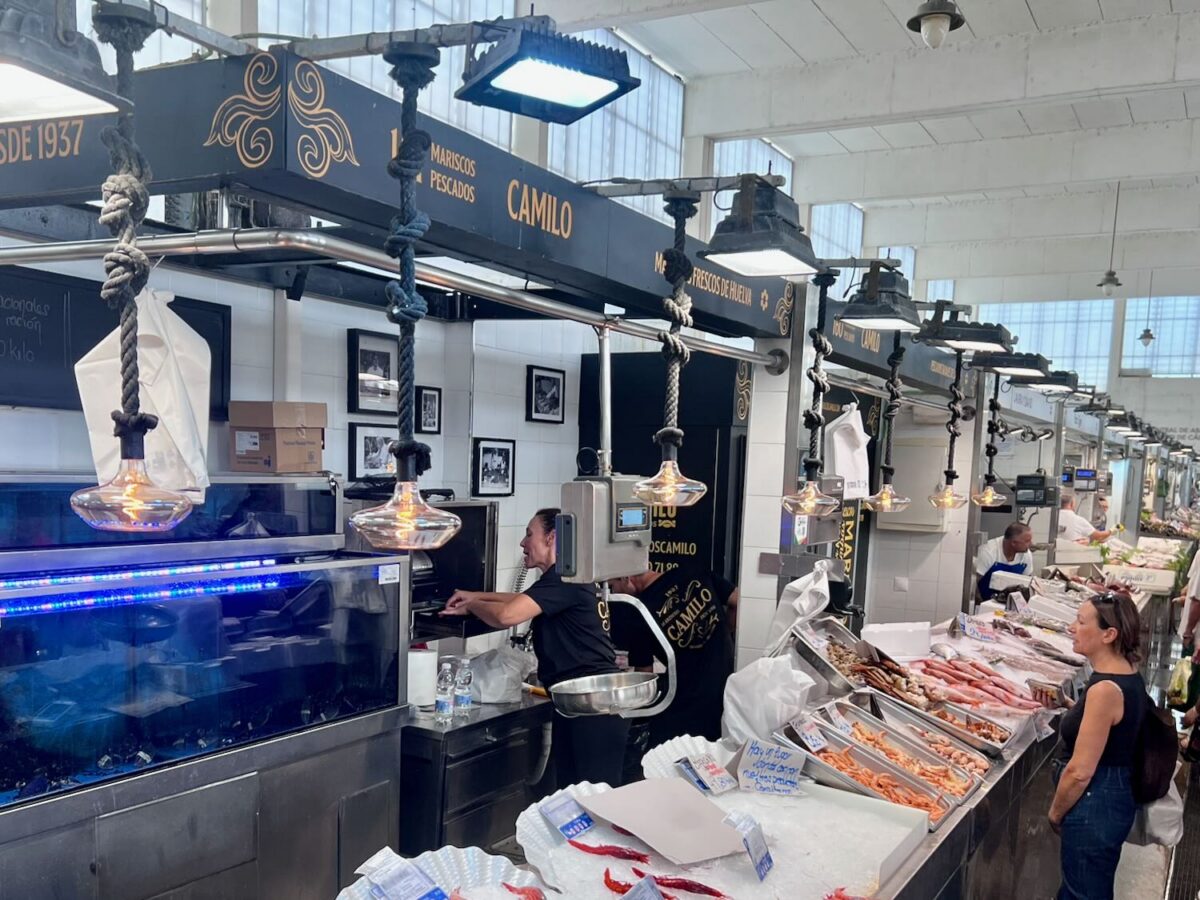
We wander slowly past displays of fish, crustaceans, and shellfish whose Spanish names we can barely place. Vendors shout out their wares, while customers stroll between stalls holding paper cups filled with fresh camarones. These wafer-thin, tiny shrimps are eaten here like popcorn. We take in the sights with wide eyes, snapping photos as we go.
Suddenly, a market trader signals that photography is a no-go. “Hola, señor,” his voice cuts through the ambient chatter as he points to a sign on the wall: No Photography. We hadn’t noticed it. While the churro baker did everything he could to help us capture a memory, the market traders prefer to keep things off-camera.
A city to be heard, seen and smelled
Cádiz’s historic centre is laid out in a tight, orderly grid of narrow streets. Soaring façades keep the fierce sun at bay, while the gentle ocean breeze off the Atlantic offers welcome relief. It reminds us of the souks in Morocco, just across the Strait of Gibraltar: small artisan shops, shaded courtyards, and the steady murmur of locals and visitors alike.
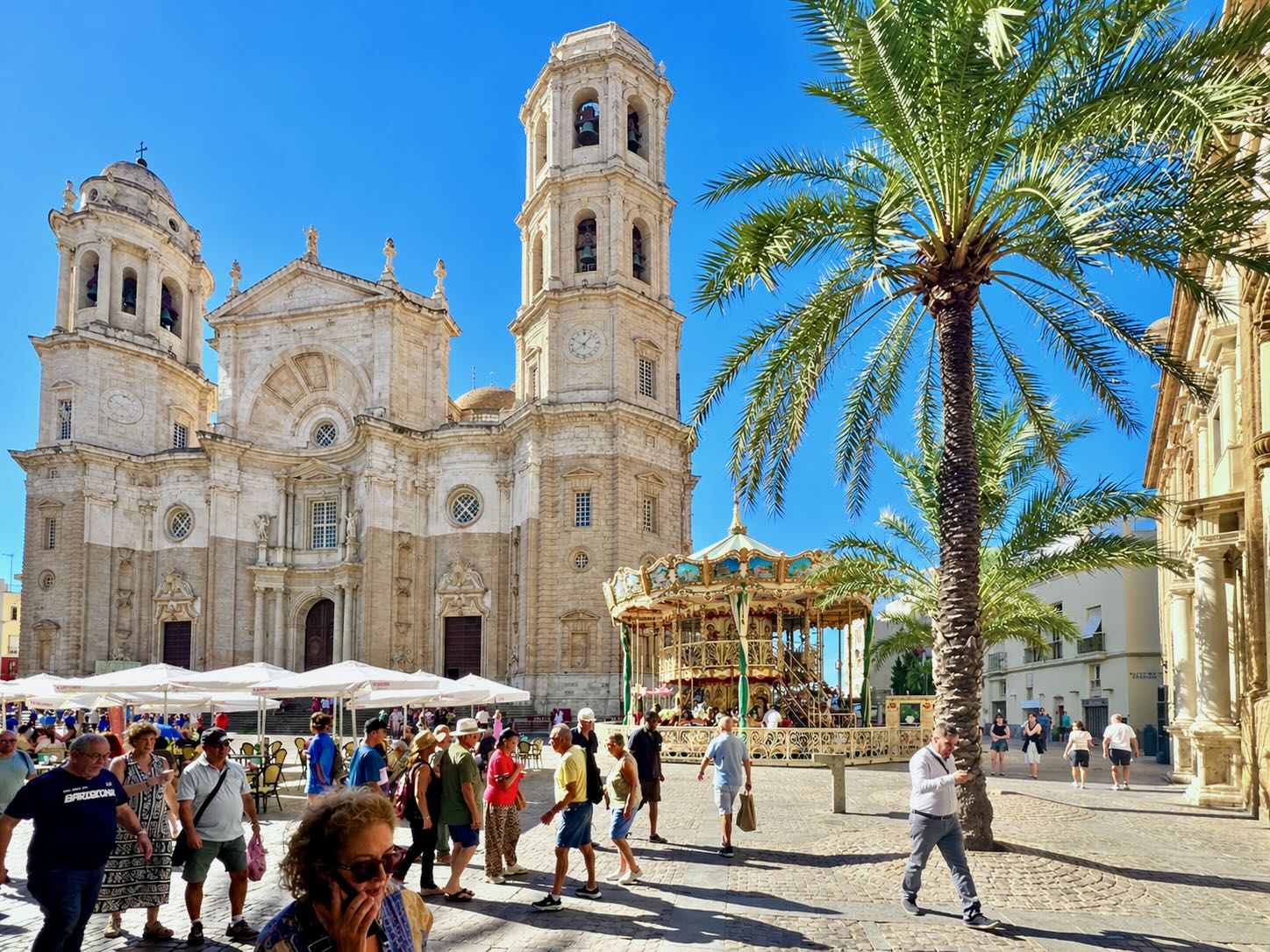
In the square facing the Catedral de Cádiz, we manage to grab the very last available table at an outdoor café. Sipping our cortados, we gaze up at the cathedral’s golden dome, standing out sharply against the vibrant blue sky and glittering in the bright sunshine.
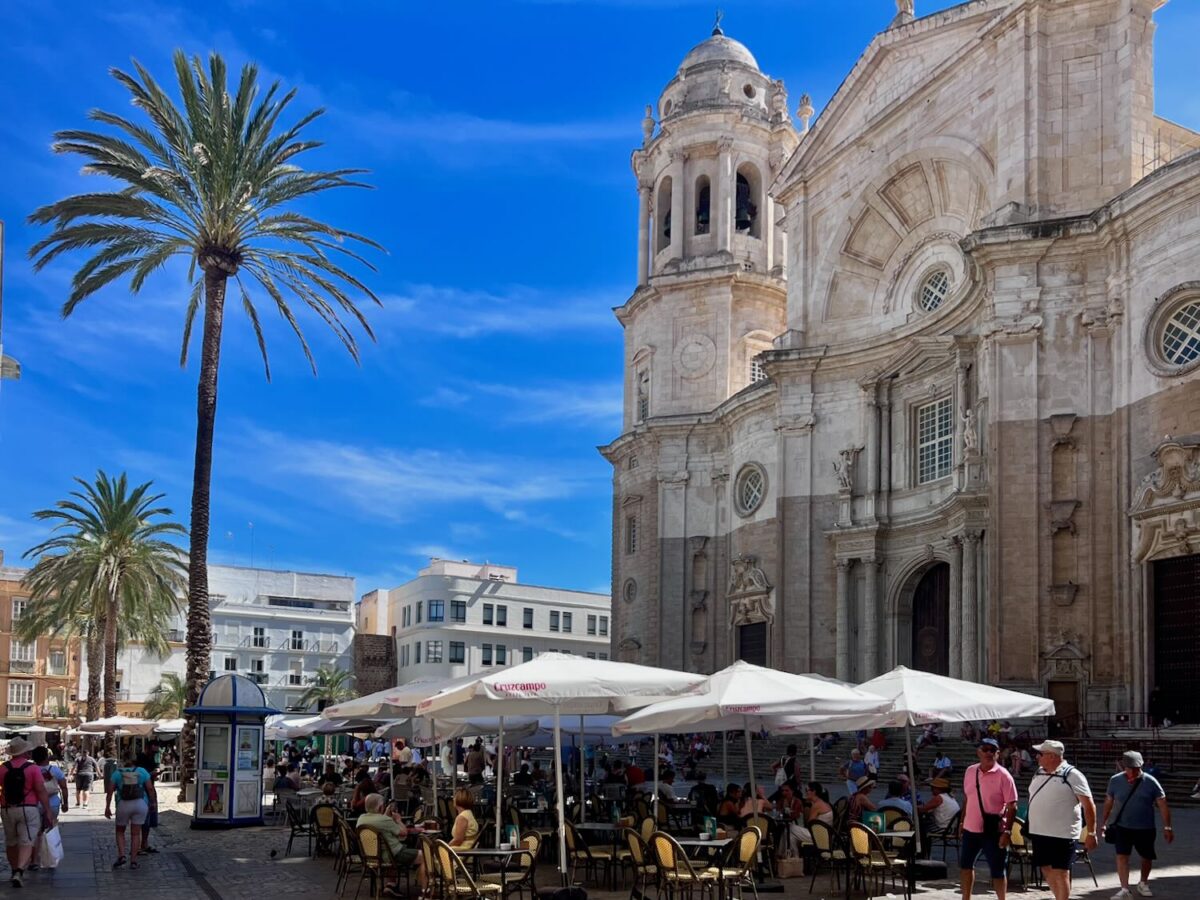
Yellow ceramic tiles clad the dome of this grand edifice, which took 116 years to build – from 1722 to 1838 – blending Baroque, Rococo, and Neoclassical styles. Just a short walk away lies the Teatro Romano, dating back to the first century BC and rediscovered by chance in 1980. It is the oldest surviving Roman theatre on the Iberian Peninsula and, with a diameter of over 120 metres, the second largest.
Stepping through the shaded alleyways, we wander aimlessly through the city. Cádiz isn’t a place you simply visit; it demands to be taken in with every sense seen, heard, and smelled.
Briny shellfish and savoury meats
In a narrow alley leading to a side entrance of the cathedral, we snatch up a spot on a shaded terrace. Before long, a plate of papas aliñás arrives: cold boiled potatoes dressed generously with olive oil, garlic, and fresh parsley.
Next come tortillitas de camarones, fried crisp using the same delicate shrimps we saw at the market, crispy around the edges, soft in the middle.
Beneath the golden crust of the croquetas de chocos lies a rich, creamy filling made from tender baby squid. To finish, we are served prawns wrapped in crispy bacon, a delicious pairing of briny seafood and savoury meat.
Suddenly, the cathedral’s heavy wooden doors burst open. To resounding applause and loud cheers from wedding guests gathered outside, the newlyweds emerge into the sunshine.
The bride tosses her bouquet into the crowd before the couple step into a vintage car and drive off. The guests drift away towards the reception, where the celebrations will no doubt carry on well into the night.
Paseo Fernando Quiñones
Standing along the waterfront, you feel just how slender this peninsula is as it juts far out into the Atlantic. Despite the light sea breeze, the blazing sun makes it too hot for a long stroll along the promenade.
From La Caleta beach, we look out towards the Castillo de San Sebastián, perched on a small islet connected to the mainland by a causeway. A little further along stands the Castillo de Santa Catalina.
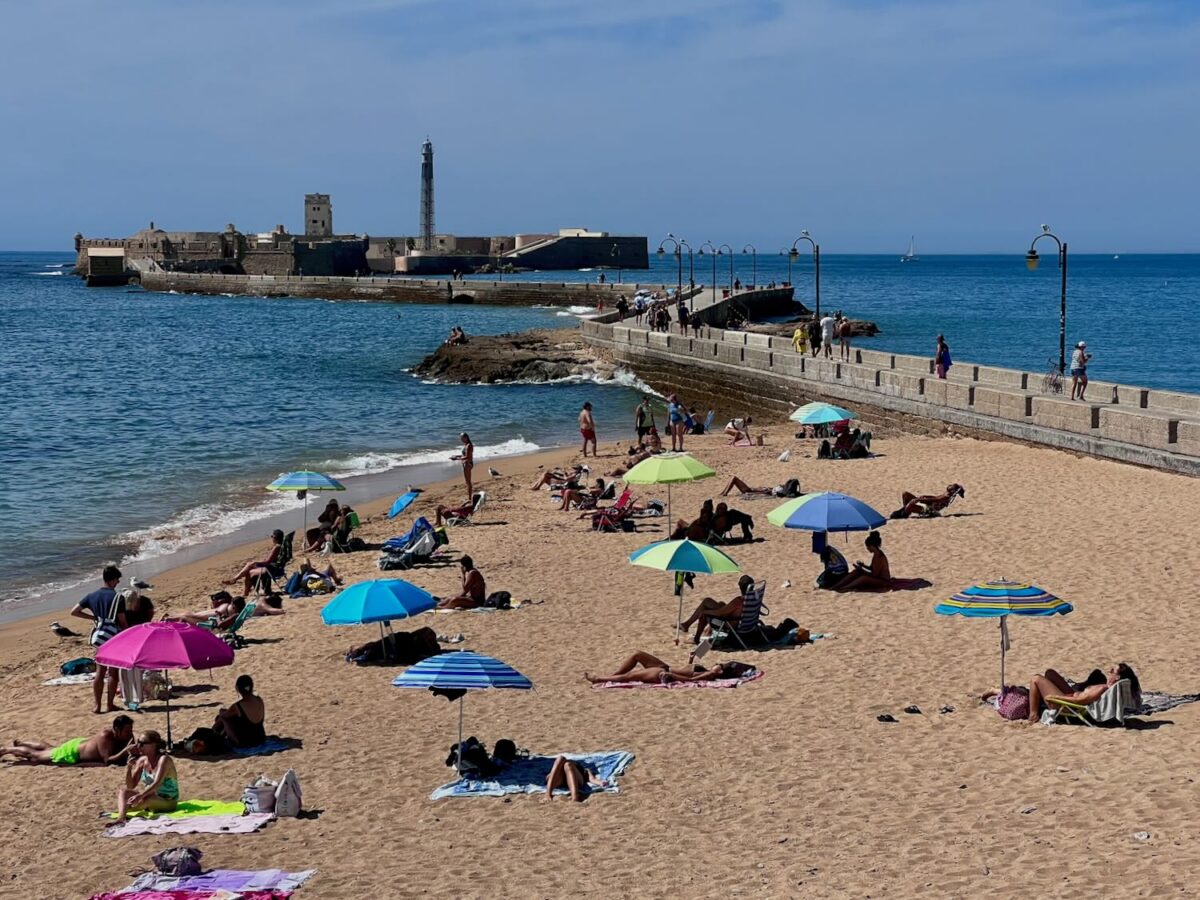
The tiny island of San Sebastián has served as a place of refuge and watchfulness for centuries. In 1457, the crew of a Venetian ship built a chapel here after being permitted ashore to recover from the plague. A watchtower was added in 1613, and the present-day fortress was built in 1706 to defend the city.
Twenty years ago, the Paseo Fernando Quiñones, the path leading to the castle, was little more than a rugged breakwater made of piled natural stones. Today, giant concrete blocks absorb the crashing waves.
The sunlight glares so fiercely off the stone that a full walk across feels too punishing today. We decide to save the causeway for next time, and there will undoubtedly be a next time.
Next stop: Jerez de la Frontera
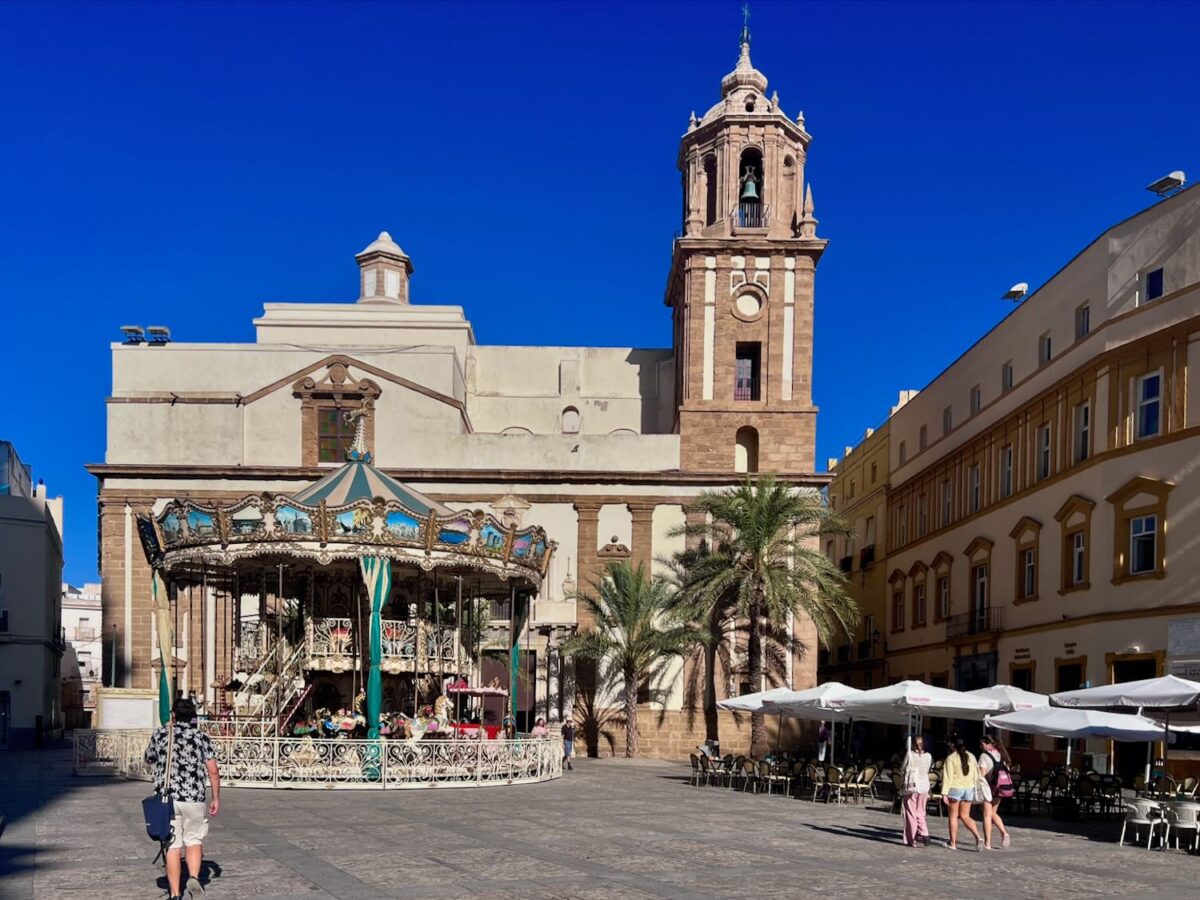
As we meander back towards our taxi pickup point, we spot a poster advertising a live flamenco show beside a tiled artwork in the Barrio de la Viña, the city’s old fishing quarter. It brings back fond memories of the spellbinding performances we saw in Madrid and later in Córdoba.
Together with nearby Jerez de la Frontera, Cádiz is widely regarded as one of the birthplaces of Andalusian song and dance.
While waiting for our ride back to the motorhome, we take a moment to absorb the day’s experiences. Today felt different; we have finally come to know Cádiz as a city that continually reveals new layers.
Yesterday it wasn’t on our list, but today it has firmly earned a spot among our absolute favourites. Back at Churrería Ana, the dough is still swirling in the hot oil. That alone is reason enough to return.
Cádiz in facts and figures
- Origins. Founded around 1104 BC by the Phoenicians as Gadir, making it one of the oldest continuously inhabited cities in Western Europe.
- Location. Situated on a narrow peninsula along Andalusia’s Costa de la Luz, surrounded by the Atlantic Ocean.
- Population. Just over 110,000 residents, known as Gaditanos.
- Mainland Bridge. The Puente de la Constitución de 1812 (popularly known as La Pepa), opened in 2015. Spans over three kilometres across the bay, extending to approximately five kilometres including viaducts and access roads.
- Cathedral. The Catedral de Cádiz was constructed between 1722 and 1838, harmoniously combining Baroque, Rococo, and Neoclassical architecture.
- Fortresses. Flanking La Caleta beach are the Castillo de Santa Catalina (started in 1598, completed in 1621) and the Castillo de San Sebastián (the current fortress dating from 1706).
- Roman Theatre. The Teatro Romano dates from the first century BC and was rediscovered in 1980. It is the oldest preserved Roman theatre on the Iberian Peninsula and the second largest, with a diameter of over 120 metres.

Leave a Reply